
Press Hall
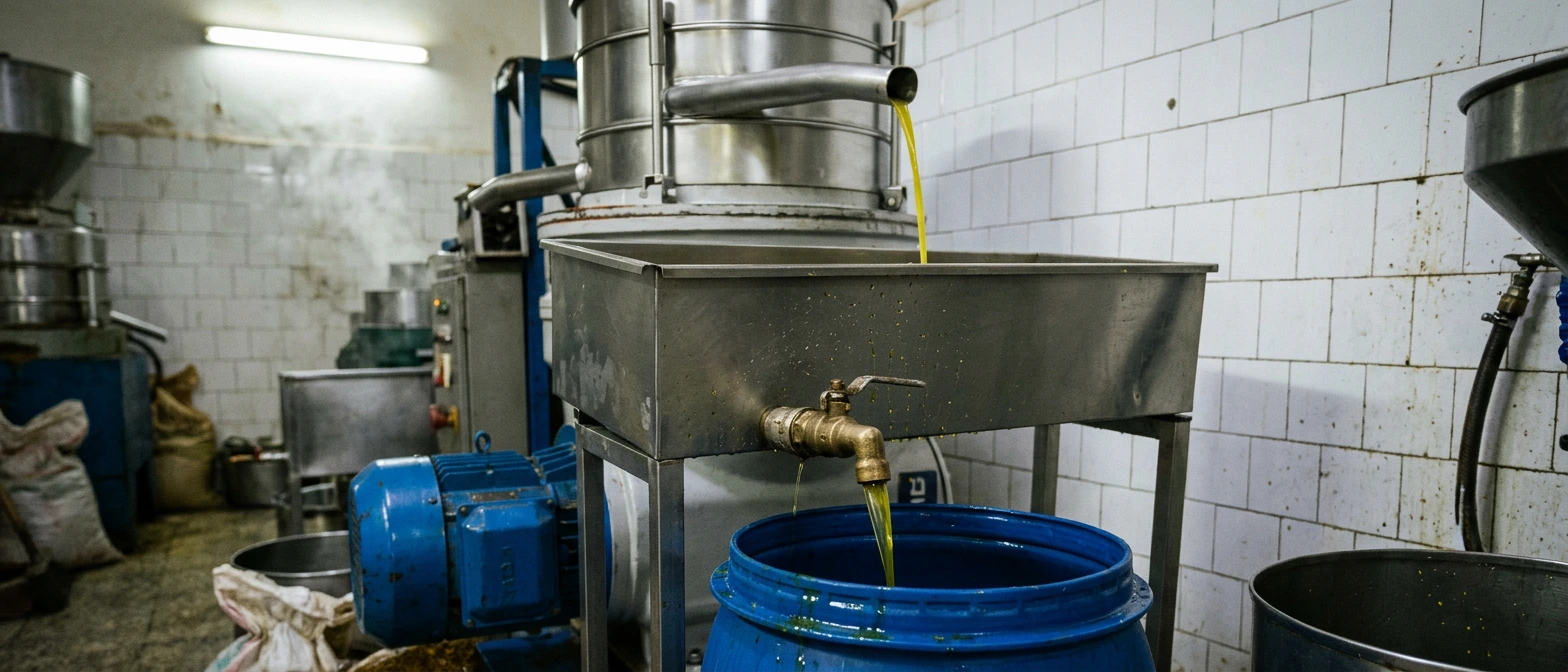
First cold press extraction line in operation.
Partner farm sourcing, first cold press extraction, on-site storage, and per-batch lab analysis across our Tunisian olive oil supply chain.
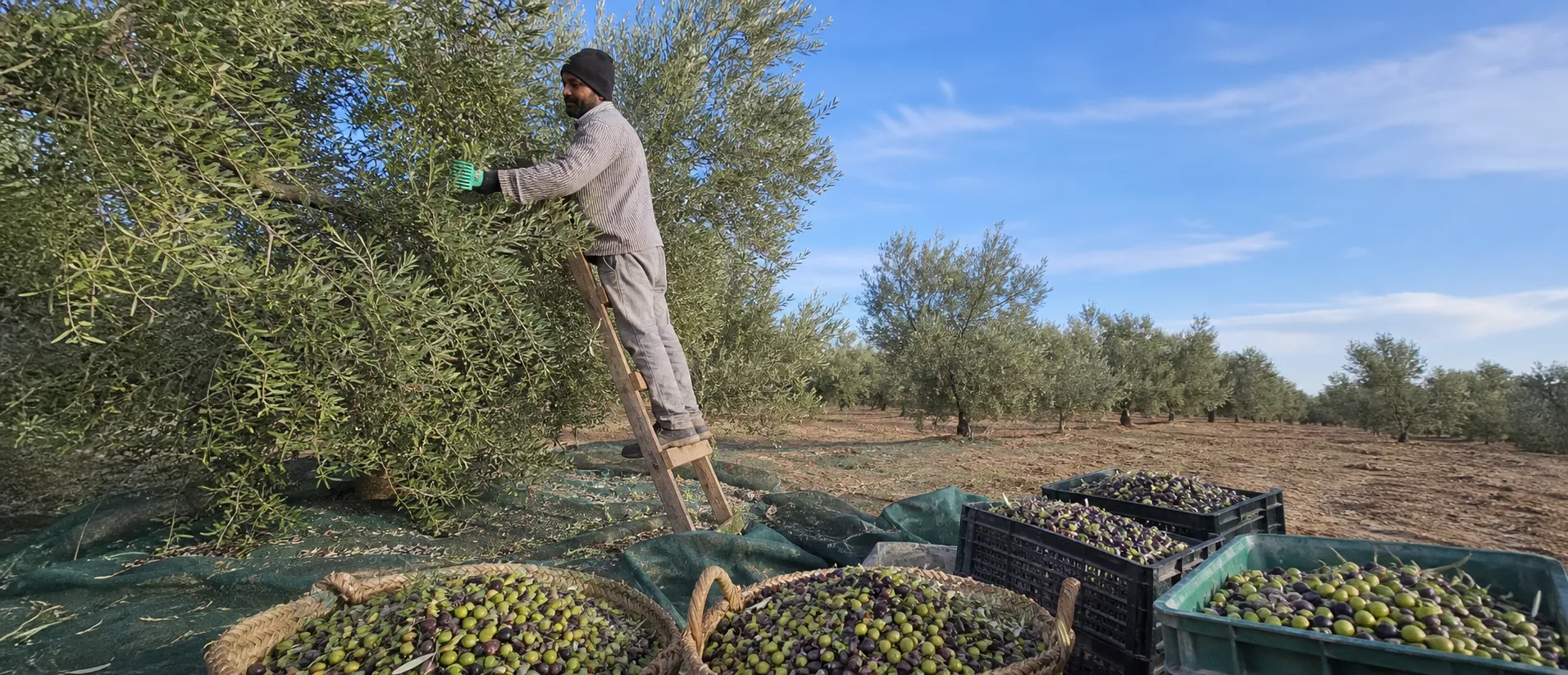
Olives are sourced from a network of certified partner farms concentrated in Mahdia and Sfax. Selection is on organic compliance, harvest practice, and transport-to-press timing — not on price alone.
Every partner farm is held to the same organic standard and the same per-batch testing protocol. That uniformity is what keeps a 1 L sample consistent with the 24,000 L flexitank that ships against it.
Relationships run multi-year, with annual independent verification of organic status.
The Tunisian olive harvest runs from October to January, with timing per partner farm set by fruit maturity rather than calendar.
Olives are moved from grove to press within hours of picking to preserve free acidity at the low end of the EVOO range.
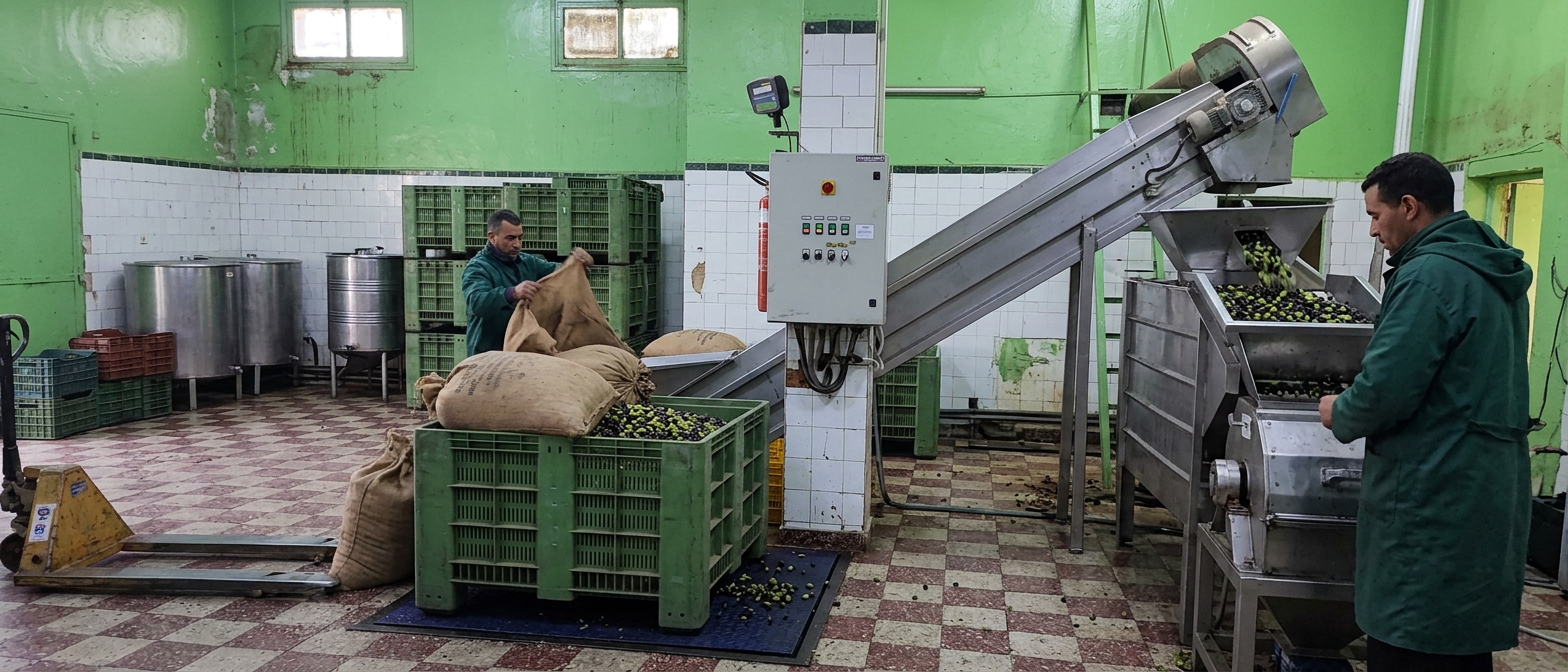
Extraction is mechanical, first press only, with the process temperature held below 27°C — the cold-press ceiling that preserves polyphenols and volatile compounds.
No chemical solvents, no thermal extraction, no second-run refining is used at any point. The output is single-stream extra virgin olive oil, organic certified across the chain.
Each press batch is sampled before transfer to storage, then logged against its source farm and harvest date.
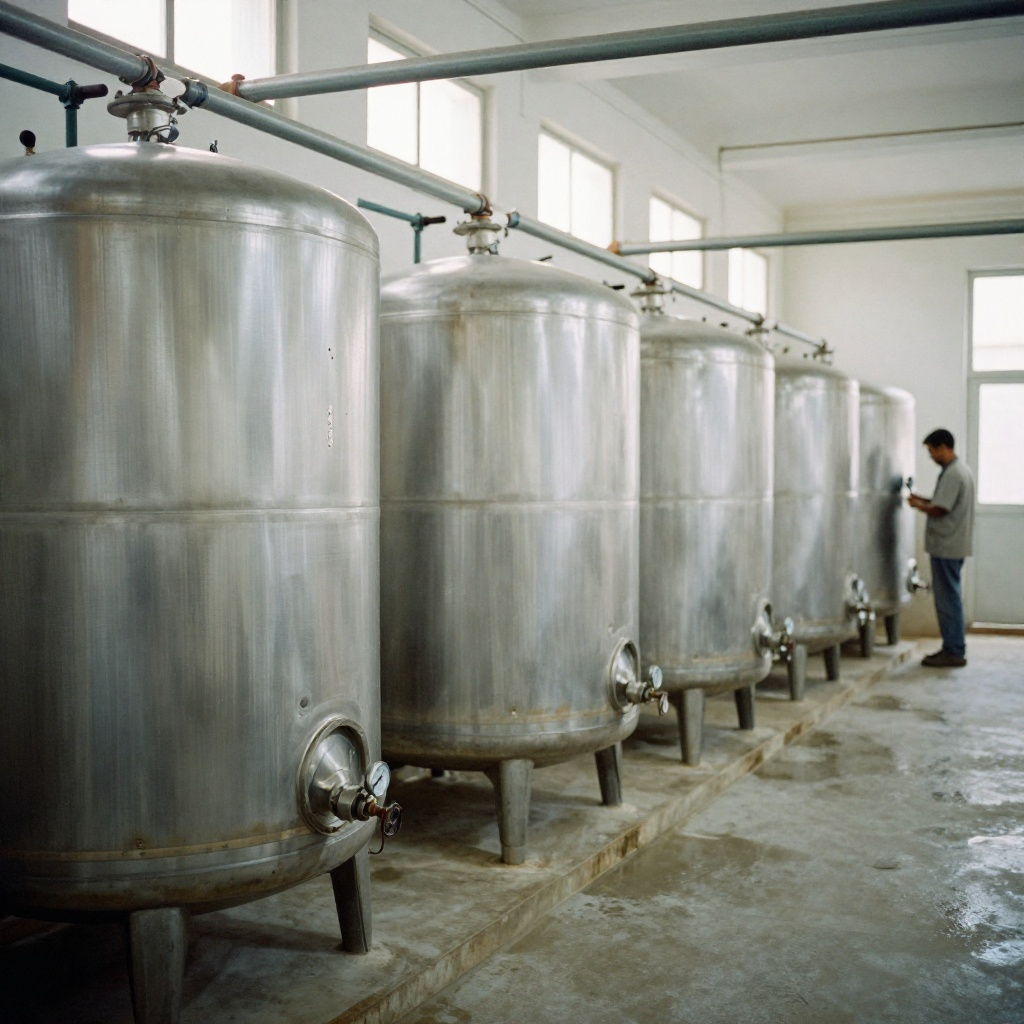
Stainless steel tanks on-site hold inventory between harvests under controlled temperature, smoothing availability beyond the harvest window.
Stabilized storage between extraction and shipment lets framework buyers draw against held volume rather than the spot market, which is what makes 6 to 12 month contracts viable.
Lab report issued with every shipment.
Each finished lot carries a batch code that links it back to its source partner farm, harvest date, and lab report. The chain is reconstructable in either direction, which is what audit-driven buyers need at customs and at retailer compliance review.
Documentation travels with the shipment, not after it.
Bulk formats — flexitank, IBC, drums, and food-grade tanker — are loaded directly from on-site tanks. Bottled lines from 0.25 L to 5 L are palletized to EUR or US standards.
The export document pack is prepared and issued before the container loads under FOB, CIF, CFR, EXW, or DAP.
First cold press extraction line in operation.
Stainless steel storage between harvest and shipment.
In-house and partner lab for per-batch analysis.
Certified bottling for retail and private label SKUs.
Case packing and palletization to EUR or US standards.
Container and flexitank loading under documented Incoterm.
Request a quote, a sample, or a virtual tour of the production chain.